
Commercial / Foundations
Concrete Foundations NZ
Every building starts with the ground. NZ Concrete Group builds commercial foundations across New Zealand, from simple pad footings to complex piled raft systems — engineered for the actual soil conditions under your site.
Discuss Your ProjectFoundations for New Zealand Conditions
New Zealand's geology is exceptionally varied. Within a single city you can encounter clay, sand, peat, volcanic rock, alluvial gravels, and reclaimed fill — sometimes on the same site. Add seismic loading requirements, and it becomes clear why foundation design and construction is specialist work.
With 30+ years of building foundations across the country, NZ Concrete Group has worked in almost every ground condition New Zealand presents. We work with geotechnical engineers to translate their recommendations into buildable, cost-effective foundation solutions.
Foundation Types
Raft Slabs
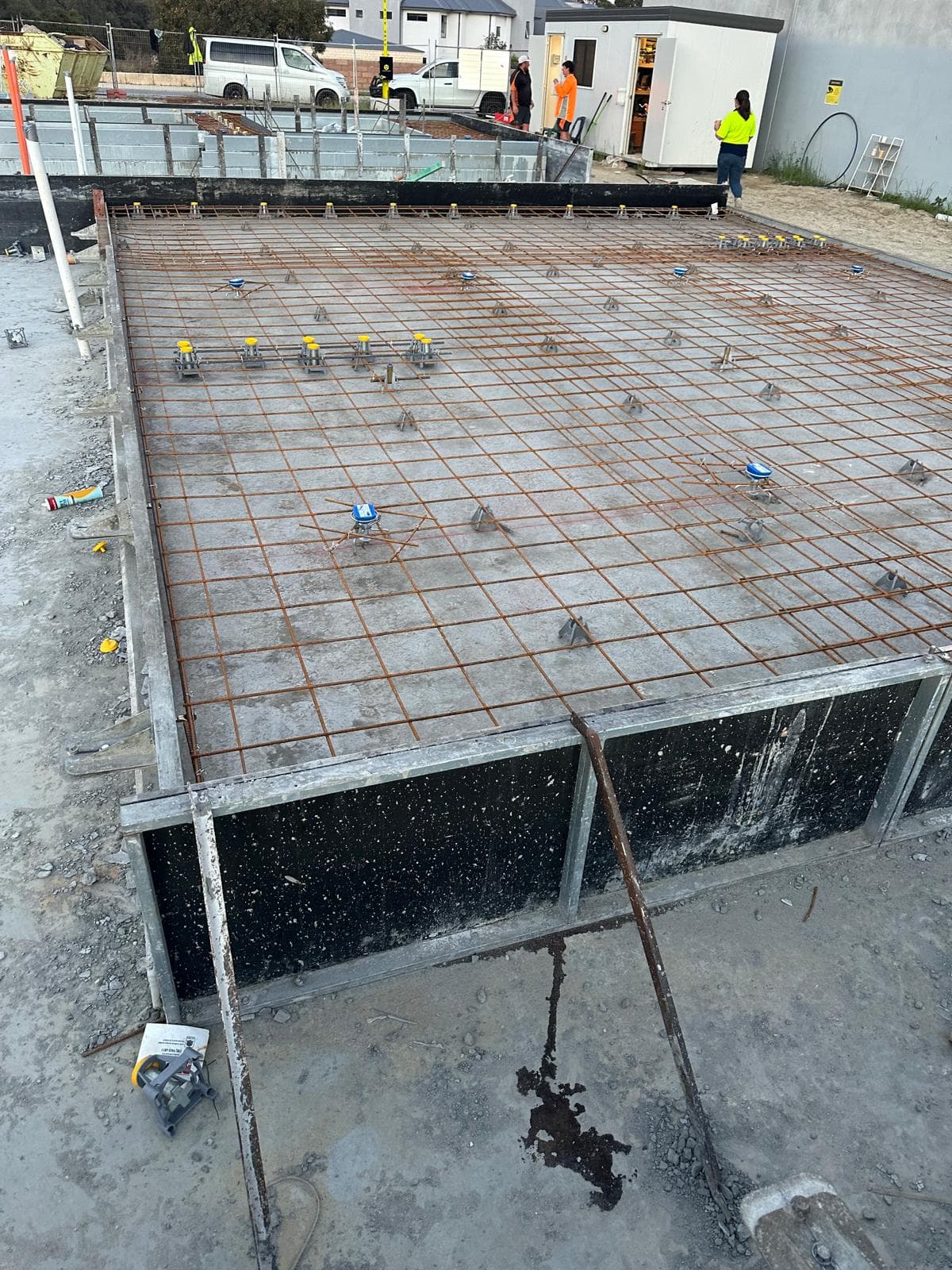
A continuous reinforced concrete slab that spreads building loads across the full footprint. Common for commercial buildings on softer or variable ground where differential settlement must be controlled. We pour raft slabs from small commercial buildings up to multi-thousand-square-metre industrial floors.
Pad Footings
Isolated concrete pads under each column or load point. The most straightforward and economical foundation type when ground conditions are good and bearing capacity is adequate at shallow depth. We typically form and pour pad footings with integrated starter bars for the structure above.
Strip Footings
Continuous concrete strips beneath load-bearing walls. Used for commercial buildings with masonry or concrete wall construction where loads are distributed linearly rather than at discrete column points.
Bored Piles
Drilled shafts filled with reinforced concrete, reaching down to competent bearing strata. Essential when surface soils cannot support building loads and the structure must bear on deeper rock or dense ground. We handle piles from 450mm to over 1200mm diameter.
Driven Piles
Pre-formed concrete or steel piles hammered into the ground to reach bearing capacity through end-bearing or skin friction. Used on sites where bored piles are impractical or where the ground profile suits driven installation.
Pile Caps & Ground Beams
The concrete elements that sit on top of piles and transfer building loads into them. Pile caps connect groups of piles under columns, while ground beams span between pile caps to support walls and distribute loads.
Our Foundation Process
01
Site Review
We review the geotechnical report, structural drawings, and site conditions to understand the foundation requirements and plan our approach.
02
Excavation & Preparation
Bulk excavation, trimming to level, compaction, and installation of damp-proof membranes and blinding layers as specified by the engineer.
03
Reinforcing & Formwork
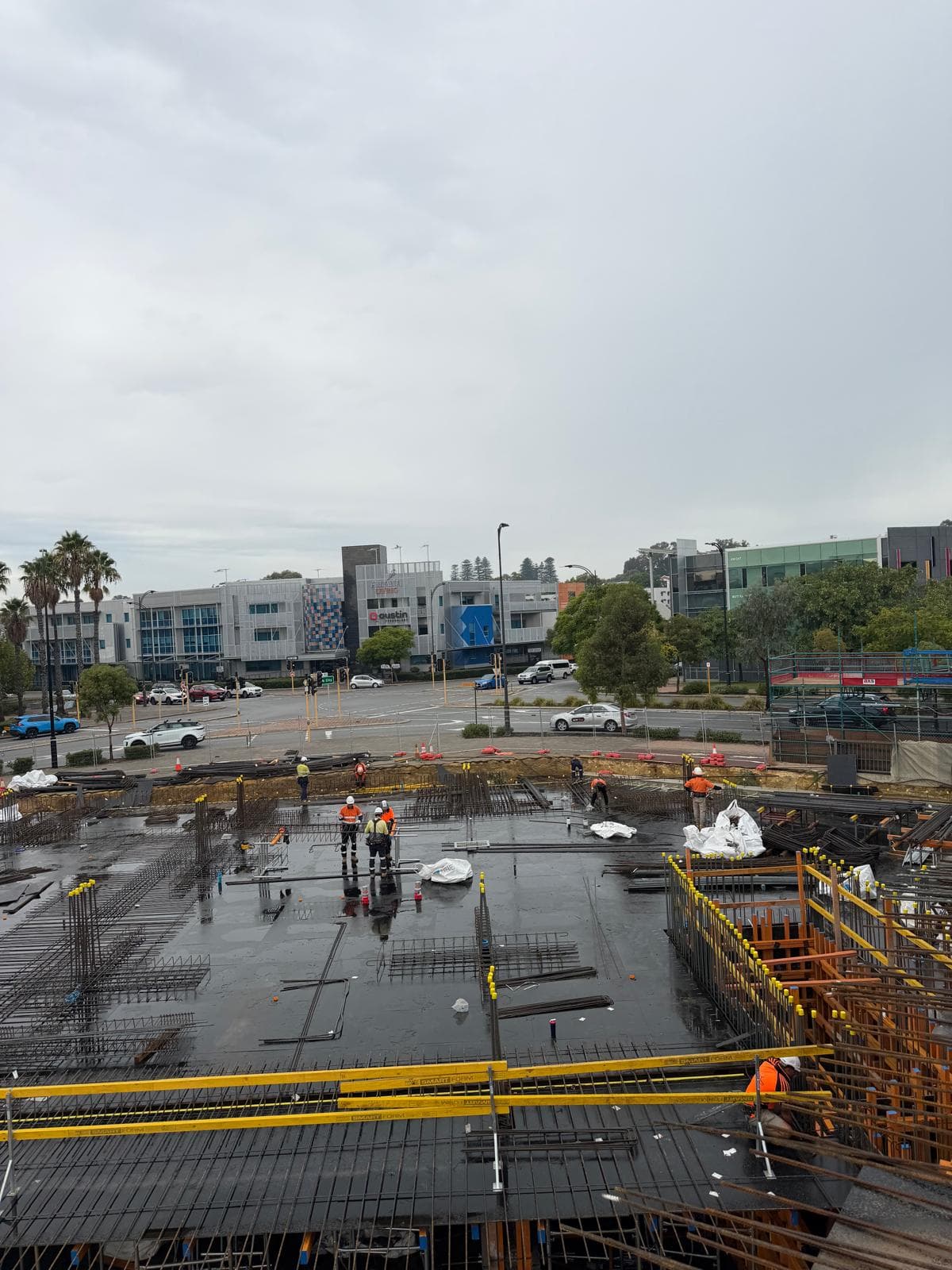
Steel reinforcing placed and tied to specification, with timber or steel formwork set to line and level. All work is inspected before concrete placement.
04
Pour & Cure
Concrete placed, vibrated, screeded, and finished. Proper curing is managed through the critical early days to ensure the foundation achieves its specified strength.
NZ Ground Conditions We Work In
Auckland Clay & Volcanic
Waitemata residual clays, East Coast Bays sandstone, and volcanic basalt. Variable conditions that often require piled foundations.
Waikato Peat & Alluvial
Organic peat soils and river-deposited alluvium. Our home territory — we have three decades of experience building on these challenging soils.
Canterbury Gravels
Well-draining Canterbury Plains gravels and post-earthquake liquefaction-prone soils that require specific foundation approaches.
Need Commercial Foundations?
Send us your geotechnical report and structural drawings. We will provide a detailed foundation construction quote.
Get a Quote